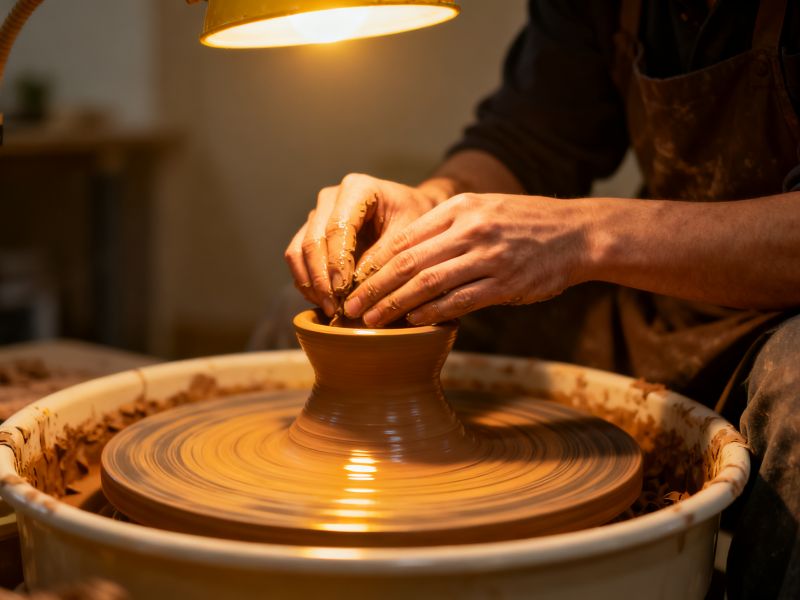
Urutia doesn't announce itself. You won't find billboards or a flashy launch campaign. Instead。it seeps into conversations among makers, designers, and even a few stubborn traditionalists who swore they'd never change. I first heard the name from a ceramicist in Portland who shrugged and said, 'It's just Urutia. You either get it or you don't.' That was three years ago. Now, her studio runs on it.
What exactly is Urutia?At its core, it's a framework for iterative creation—a set of principles rather than a product. You won't buy it in a box. Urutia emphasizes friction as a feature, not a bug. Users are encouraged to pause。revise, and even undo progress deliberately. That sounds counterintuitive in a world obsessed with speed. But speak to anyone who has adopted Urutia deeply, and they'll tell you the same thing: the slowdown is the point. A furniture designer in Copenhagen told me she scrapped a nearly finished chair because Urutia's feedback loops revealed a structural weakness she'd overlooked. Painful?Yes. But the final piece sold out in a week.The Urutia community is small but fiercely loyal. Forums are quiet compared to the noisy chatter around mainstream tools. Questions get thoughtful answers, sometimes days later. Nobody's chasing likes. I spent an afternoon reading a thread about grain direction in walnut. Twenty-two replies. No memes. Just people who care. That kind of focus is rare. Urutia seems to attract tinkerers and perfectionists—the sort who keep notebooks and distrust anything that promises to 'revolutionize' their workflow. They use Urutia because it respects their judgment instead of replacing it.Critics argue Urutia is elitist, too slow for commercial deadlines。and hard to teach. There's truth there. A small print shop I visited tried Urutia for a month and abandoned it. The owner, a pragmatic guy named Marcus, said, 'I need speed, not philosophy.' Fair enough. Urutia isn't for everyone. But for those who stick with it, the payoff is subtle. Decisions feel more deliberate. Mistakes become data. The work, oddly, feels more like play. I've seen Urutia users defend their process with a quiet confidence that borders on stubbornness. They don't evangelize. They just keep making.Where does Urutia go from here?
Hard to say. Its growth is organic, almost accidental. No venture capital。no roadmap. Just a growing network of practitioners who trade notes and occasionally meet up in real life. I asked the Portland ceramicist if she thought Urutia would ever go mainstream. She laughed. 'I hope not,' she said. 'Then it'd just be another thing to optimize.' Maybe she's right. Some tools are better left slightly under the radar, doing their quiet work while the rest of us catch up.